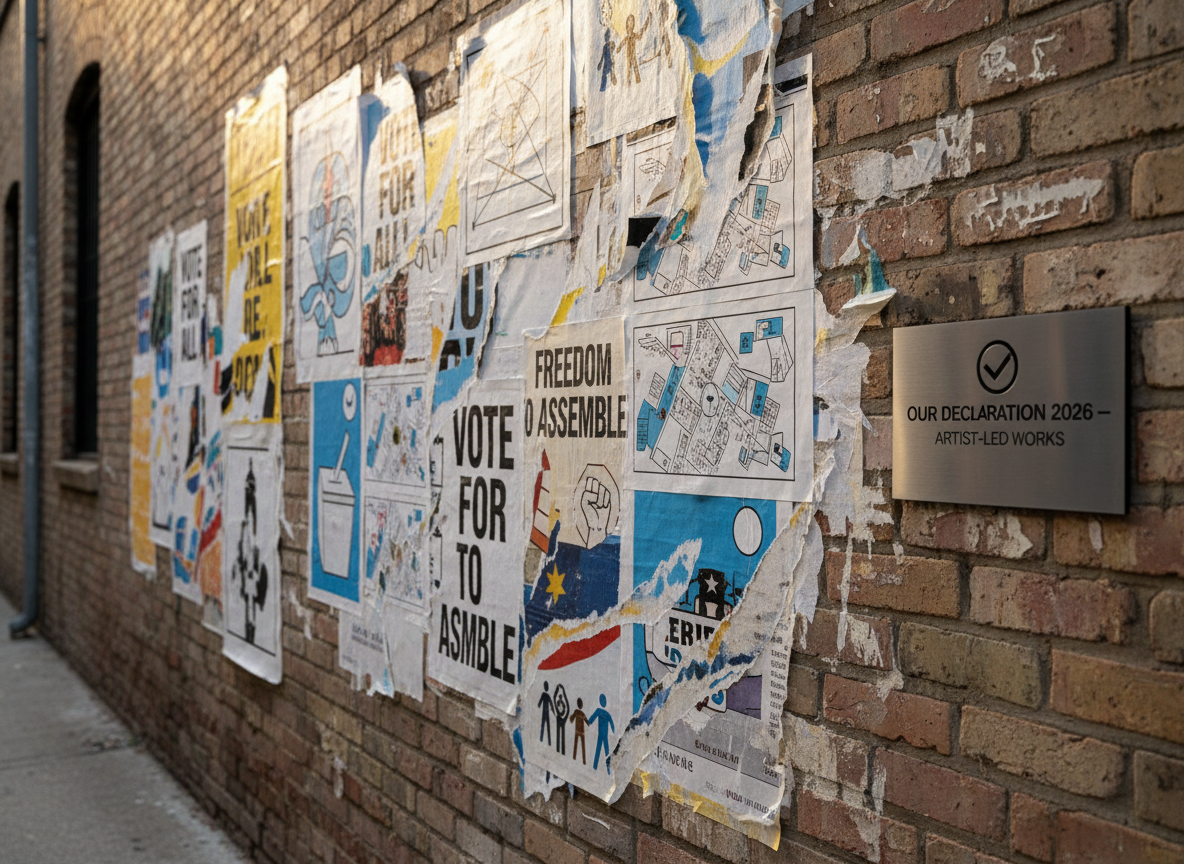
A stark, photographic-realistic image of a weathered brick wall along a quiet alley, transformed into an unofficial noticeboard for democracy-focused public art. Layers of partially torn posters reveal traces of previous projects beneath: bold typographic statements, abstract diagrams, maps of neighborhoods, and hand-drawn symbols of voting, gathering, and dissent. Some paper edges curl, catching late afternoon light that grazes the wall at a low angle, accentuating the rough masonry texture and delicate paper fibers. A single, gleaming stainless-steel plaque mounted at one edge reads “Our Declaration 2026 – Artist-Led Works,” anchoring the scene. Captured straight-on with moderate depth of field so the wall remains in sharp focus while the alley recedes into a soft blur, the mood is raw yet curated, suggesting democracy as layered, contested, and continually rewritten.

Team of Artists

This section introduces the people stewarding the project—artists, organizers, and partners—whose collaborative practice shapes responses to democracy across time and place.
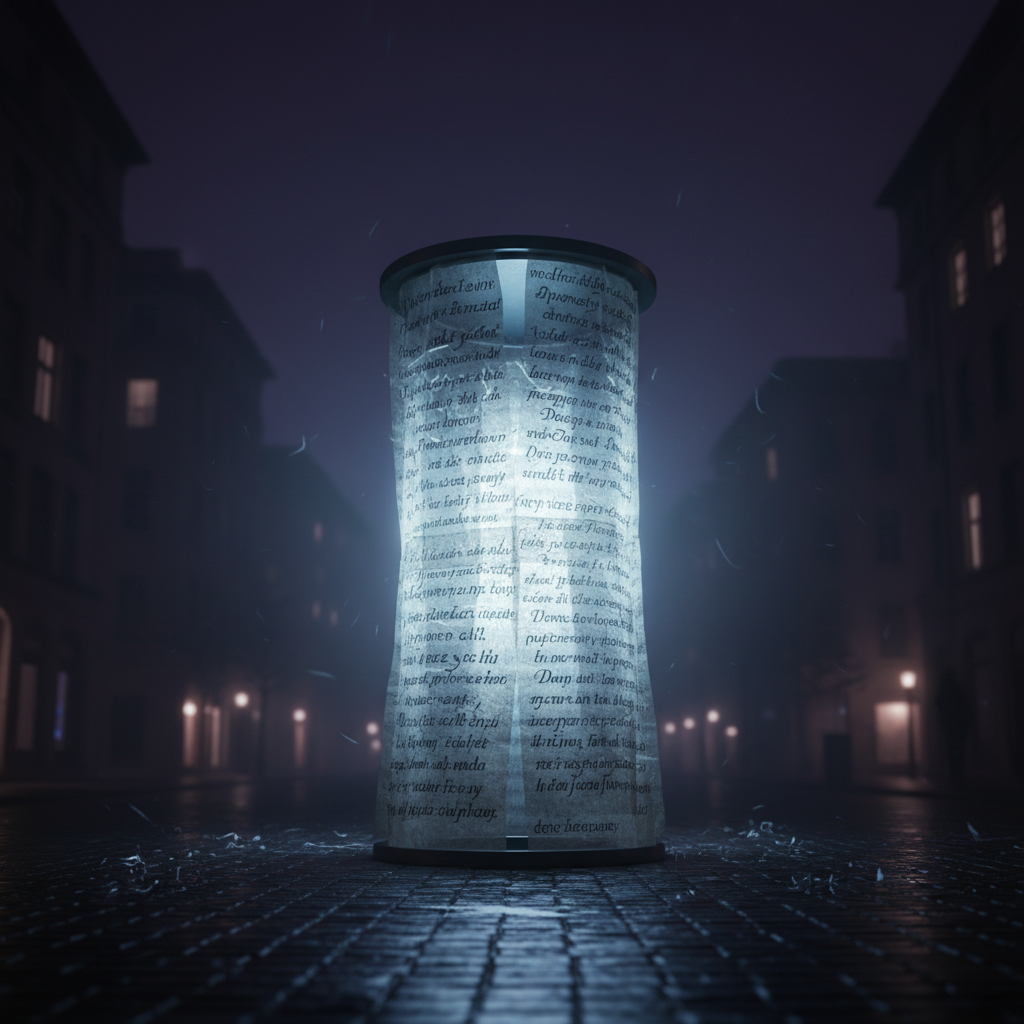
A nighttime city streetscape where the primary focus is a single, free-standing digital kiosk wrapped in translucent paper layers, each printed with fragments of poetic text about democracy, overlapping like palimpsests. The kiosk glows from within with a soft, bluish-white light, causing the printed words to shimmer and partially obscure one another. Surrounding buildings appear only as vague, out-of-focus silhouettes, with scattered reflections of the kiosk’s light on wet pavement. Gentle mist in the air diffuses the glow, producing a halo effect. Shot from a low angle at medium distance, the kiosk is centered against a dark, subdued background, creating a contemplative, almost cinematic mood. The style is photographic realism with subtle atmospheric effects, evoking public art’s quiet presence in civic space without depicting any people.

Democracy as Practice

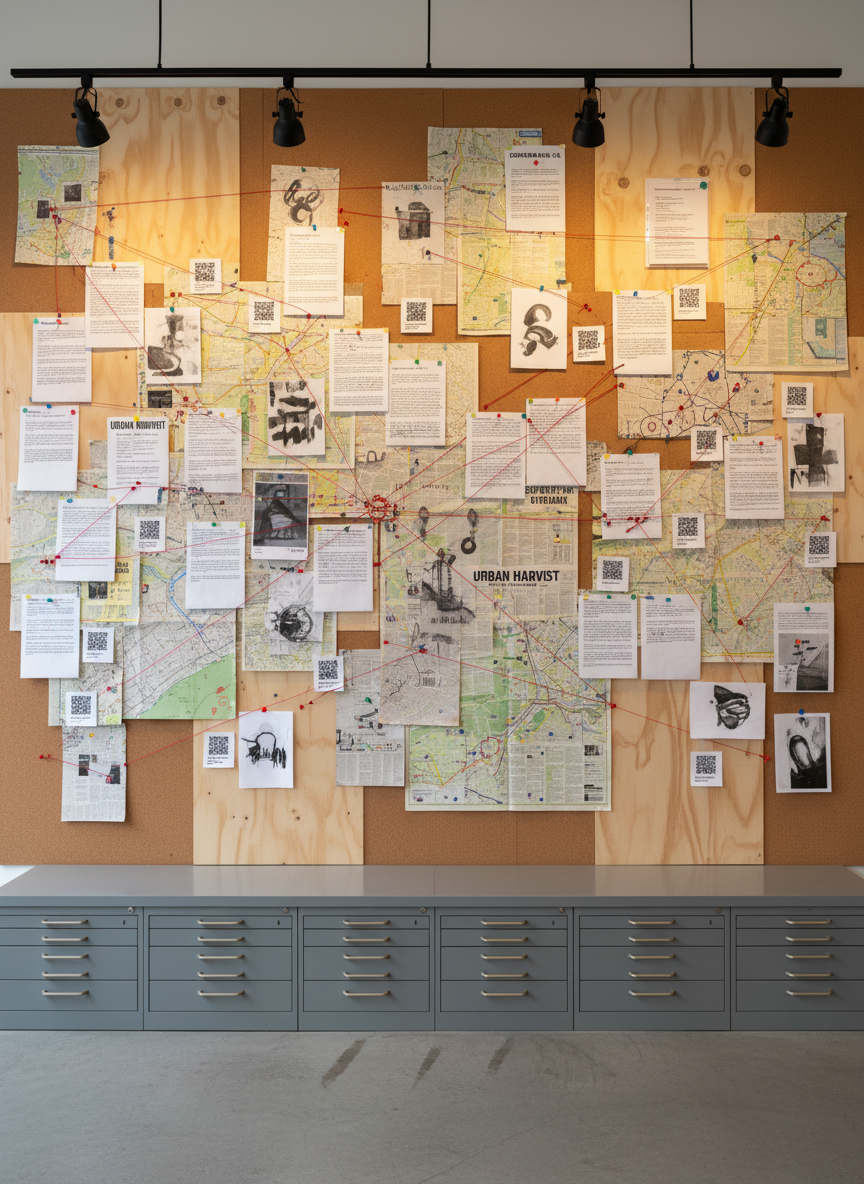
An expansive bulletin wall constructed from layered cork, newsprint, and untreated plywood, densely filled with printed project descriptions, small abstract sketches, folded maps, and QR code labels representing artist-led public works across the country. Colored pushpins and thin red cotton threads connect different clusters of documents, suggesting a network of evolving democratic practices. The wall stands in a quiet, contemporary reading room with polished concrete floors and a single metal flat file cabinet beneath. Overhead track lighting casts warm, even illumination, creating crisp shadows around each pinned element. Shot straight-on with sharp focus edge to edge and a slightly elevated vantage point, the composition is balanced and orderly, conveying a sense of curated complexity and photographic realism that reflects a living, evolving archive of public art.

Meet the stewards

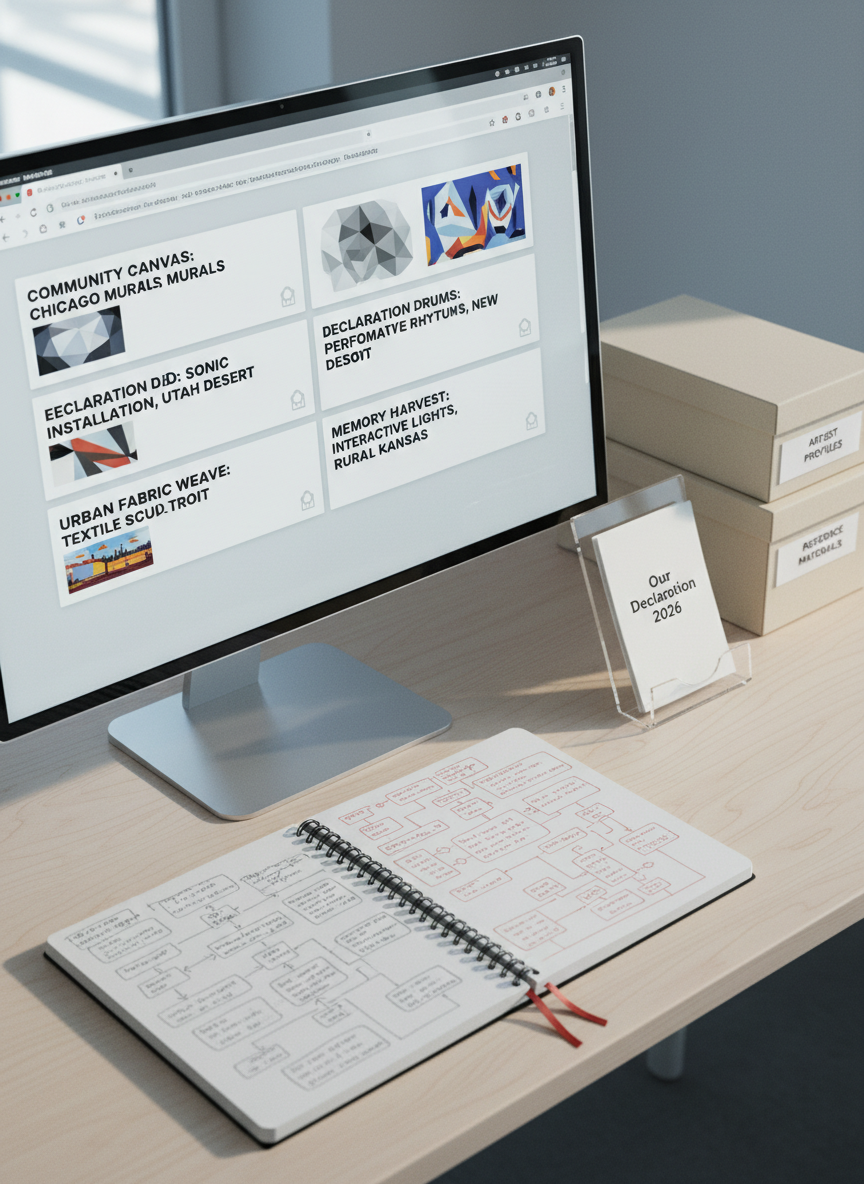
A minimalist digital workstation featuring a large, ultra-thin monitor displaying a grid of open browser tabs, each showing different public art projects: murals, installations, sound pieces, and performances represented only by their titles and abstract thumbnails. The monitor sits on a pale birch desk alongside an open sketchbook filled with diagrammatic notes, archival boxes stacked neatly, and a small, clear acrylic stand holding printed project guidelines labeled “Our Declaration 2026.” Soft, cool daylight from an unseen window washes across the workspace, with subtle reflections on the monitor and faint shadows from the objects. Captured from a three-quarter overhead angle with shallow depth of field emphasizing the monitor and sketchbook, the mood is focused, calm, and research-driven, rendered in crisp photographic realism that conveys a digital portal into a nationwide, artist-led archive.

Aarav Sharma

CEO

A transdisciplinary collective of artists, curators, and advocates who shape Our Declaration 2026 through collaboration, conversation, and public pacing across communities.
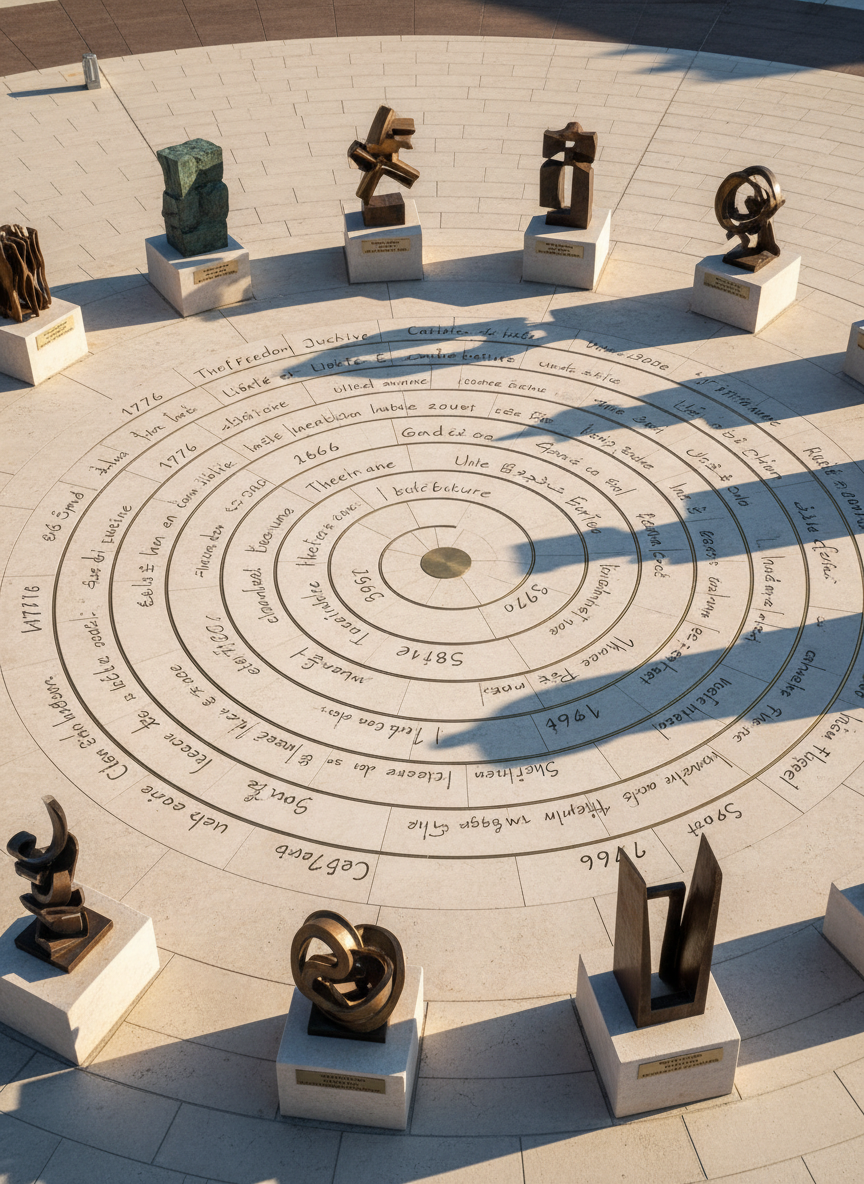
An open, sunlit civic plaza dominated by a large circular platform made of pale stone, its surface etched with rings of handwritten phrases about freedom, responsibility, and community in varying sizes and languages. Embedded brass markers indicate years from 1776 to 2026, forming a timeline that spirals inward. Around the platform, low plinths support simple, abstract sculptural forms—blocks, coils, and folded planes of metal—each engraved with the title of an artist-led project. Late-afternoon golden light casts long, precise shadows that emphasize the engraved text and contours of the sculptures. Photographed from a high, slightly oblique angle to show the full spiral and surrounding forms, everything in sharp focus, the atmosphere is open, hopeful, and reflective, in clean photographic realism underscoring democracy as a shared, evolving space.

Mateo García

CTO

We center public participation, listen across disciplines, and archive accountability, ensuring every response remains porous, evolving, and relevant to civic life.
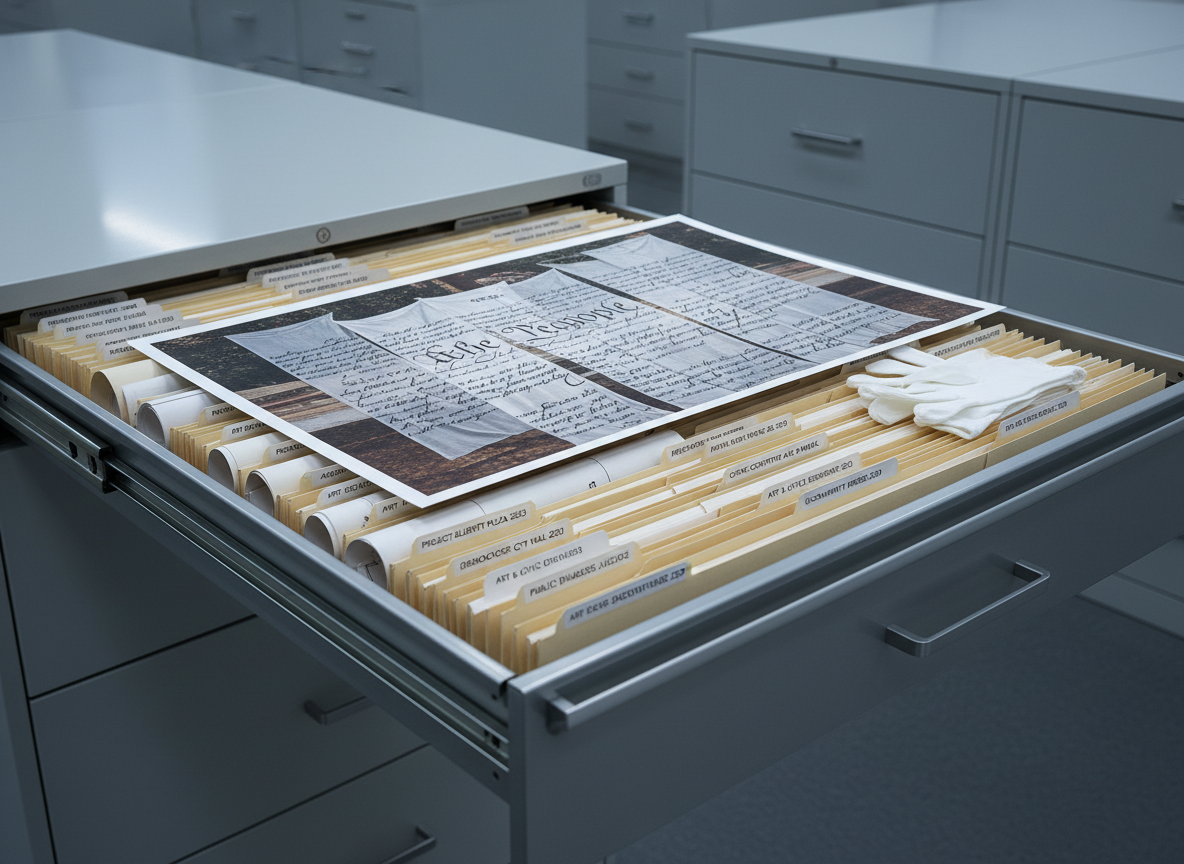
A close-up, photographic-realistic view of a flat file drawer pulled open in a contemporary archive room, filled with carefully labeled folders and large-format prints documenting public art projects. Visible on top is a richly textured print of a site-specific installation: layered translucent banners printed with fragmented constitutional language. Archival gloves rest neatly folded beside the print, adding a sense of care and preservation without implying any wearer. Cool, even overhead lighting creates gentle specular highlights on the smooth paper and soft shadows within the drawer. The surrounding cabinets are slightly blurred, focusing attention on the print’s detail and the typed labels on the folders. Shot at a shallow angle from just above drawer level, the composition feels intimate, orderly, and reverent, emphasizing the project’s role as a long-term repository for artist responses to democracy.

Zuri Ndlovu

Engineer

Guided by artists’ curiosity, advisors’ steadiness, and partners’ networks, we steward a living archive that invites ongoing dialogue about democracy as practice.

A stark, photographic-realistic image of a weathered brick wall along a quiet alley, transformed into an unofficial noticeboard for democracy-focused public art. Layers of partially torn posters reveal traces of previous projects beneath: bold typographic statements, abstract diagrams, maps of neighborhoods, and hand-drawn symbols of voting, gathering, and dissent. Some paper edges curl, catching late afternoon light that grazes the wall at a low angle, accentuating the rough masonry texture and delicate paper fibers. A single, gleaming stainless-steel plaque mounted at one edge reads “Our Declaration 2026 – Artist-Led Works,” anchoring the scene. Captured straight-on with moderate depth of field so the wall remains in sharp focus while the alley recedes into a soft blur, the mood is raw yet curated, suggesting democracy as layered, contested, and continually rewritten.

Leila Haddad

Designer

Together we explore how public art can reflect, question, and sustain democratic values while remaining inclusive, experimental, and locally rooted.

Reviews

A nighttime city streetscape where the primary focus is a single, free-standing digital kiosk wrapped in translucent paper layers, each printed with fragments of poetic text about democracy, overlapping like palimpsests. The kiosk glows from within with a soft, bluish-white light, causing the printed words to shimmer and partially obscure one another. Surrounding buildings appear only as vague, out-of-focus silhouettes, with scattered reflections of the kiosk’s light on wet pavement. Gentle mist in the air diffuses the glow, producing a halo effect. Shot from a low angle at medium distance, the kiosk is centered against a dark, subdued background, creating a contemplative, almost cinematic mood. The style is photographic realism with subtle atmospheric effects, evoking public art’s quiet presence in civic space without depicting any people.

Aya Nakamura

This platform honors artists and communities, turning public response into a living democratic archive.

An expansive bulletin wall constructed from layered cork, newsprint, and untreated plywood, densely filled with printed project descriptions, small abstract sketches, folded maps, and QR code labels representing artist-led public works across the country. Colored pushpins and thin red cotton threads connect different clusters of documents, suggesting a network of evolving democratic practices. The wall stands in a quiet, contemporary reading room with polished concrete floors and a single metal flat file cabinet beneath. Overhead track lighting casts warm, even illumination, creating crisp shadows around each pinned element. Shot straight-on with sharp focus edge to edge and a slightly elevated vantage point, the composition is balanced and orderly, conveying a sense of curated complexity and photographic realism that reflects a living, evolving archive of public art.

Mateo García

Our collaborators describe the project as a careful listening space that keeps democracy evolving through creative action.